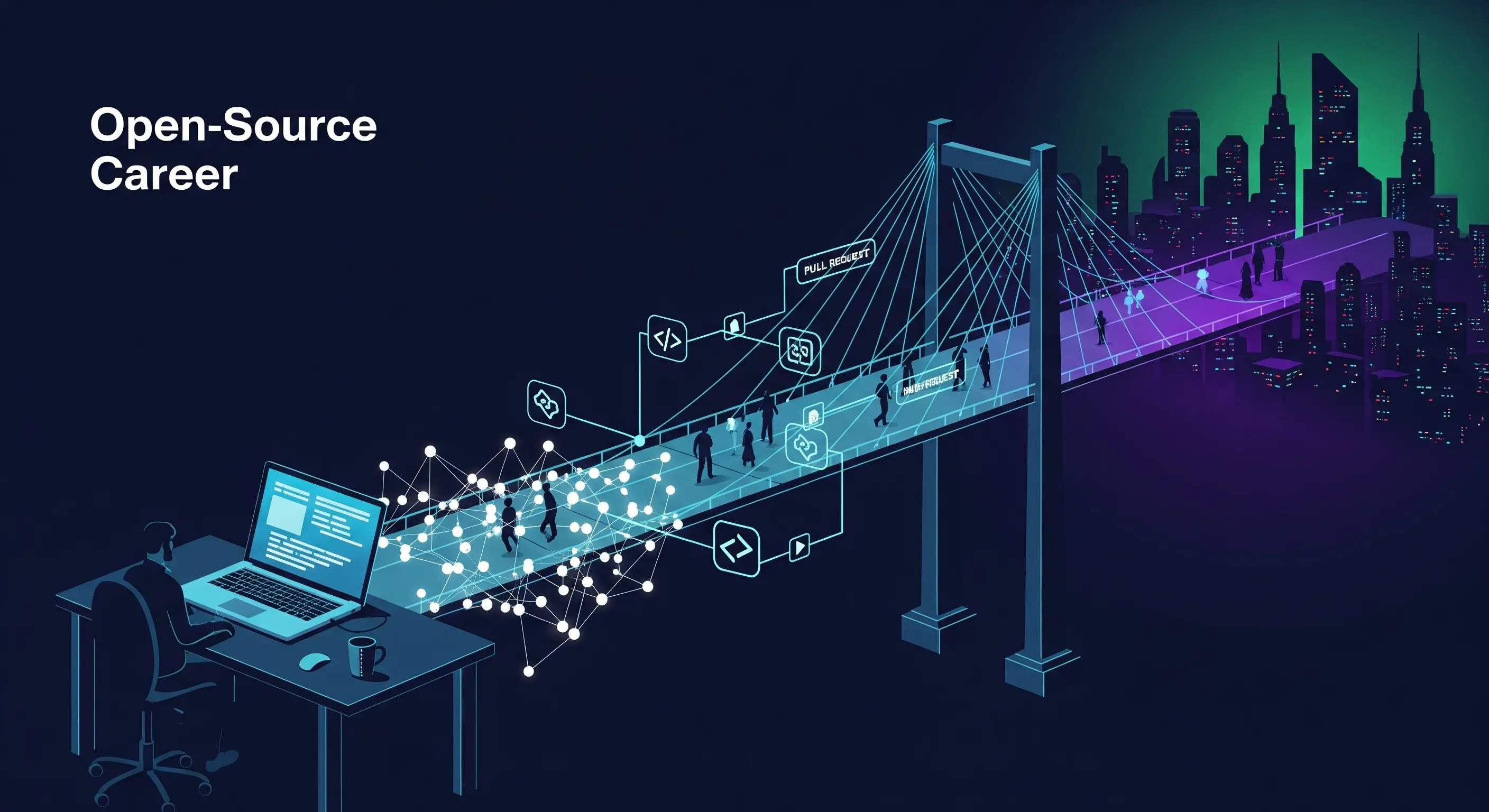
Quick Take – Immersing yourself in open-source plunges you into production code, gives you a public track record, and links you with a worldwide developer network. Start with a fix so small it feels trivial, keep showing up, and let your commits market you.
Open Source: Apprenticeship 2.0
- Production code on day one – No toy apps; you patch software people depend on.
- Job-ready muscle memory – Tests, CI, code review, release checklists.
- Built-in adrenaline – Fixing an issue for actual users is far more motivating than polishing a side-project nobody sees.
Build Credibility Before Employment
- Reproduce an issue, craft the narrowest possible commit, open the PR.
- Step outside code: tag issues, clean up docs, write tests, join design chats.
- The cycle of break-fix-ship builds deep systems intuition.
GitHub: Proof, Not Claims
Recruiters trust what they can inspect. A thoughtful profile tells the hiring story better than bullet points.
What Reviewers Scan
- Concise bio – Who you are and the tools you wield.
- Pinned repos – A handful of representative, polished projects.
- Profile README – The narrative behind your work.
- Repository READMEs – Clear install steps and screenshots that respect user time.
Personal Projects vs Open-Source Contributions
- Personal projects showcase originality.
- Open-source work shows you can extend, debate, and improve someone else’s architecture under scrutiny. One substantial PR to a famous library often outweighs countless solo repos.
The Skill Flywheel
Technical Grit
- Advanced Git workflows, CI pipelines, test suites, and peer review.
- Hunting gnarly bugs with thousands of users waiting on the fix.
- Exposure to many stacks prevents single-tech tunnel vision.
People Chops
- Precise issue descriptions and PR rationales.
- Respectful, constructive feedback loops.
- Leadership through steady, high-quality contributions.
Activity → Learning Matrix
| Activity | Tech Gains | People Gains |
|---|---|---|
| First “good first issue” | Local build, basic Git | Following contribution rules, accepting feedback |
| Tackling a user-blocking bug | Debugging, tests | Clarifying questions, empathy, async updates |
| Reviewing another PR | Architecture thinking | Mentorship tone, diplomacy |
| Polishing docs | API familiarity | Clear technical writing |
Network Compounding
- Real bonds form around code shipped together.
- Regular contributors become informal mentees/mentors.
- Credibility transfers: a maintainer badge is understood across companies.
Edge in Hiring
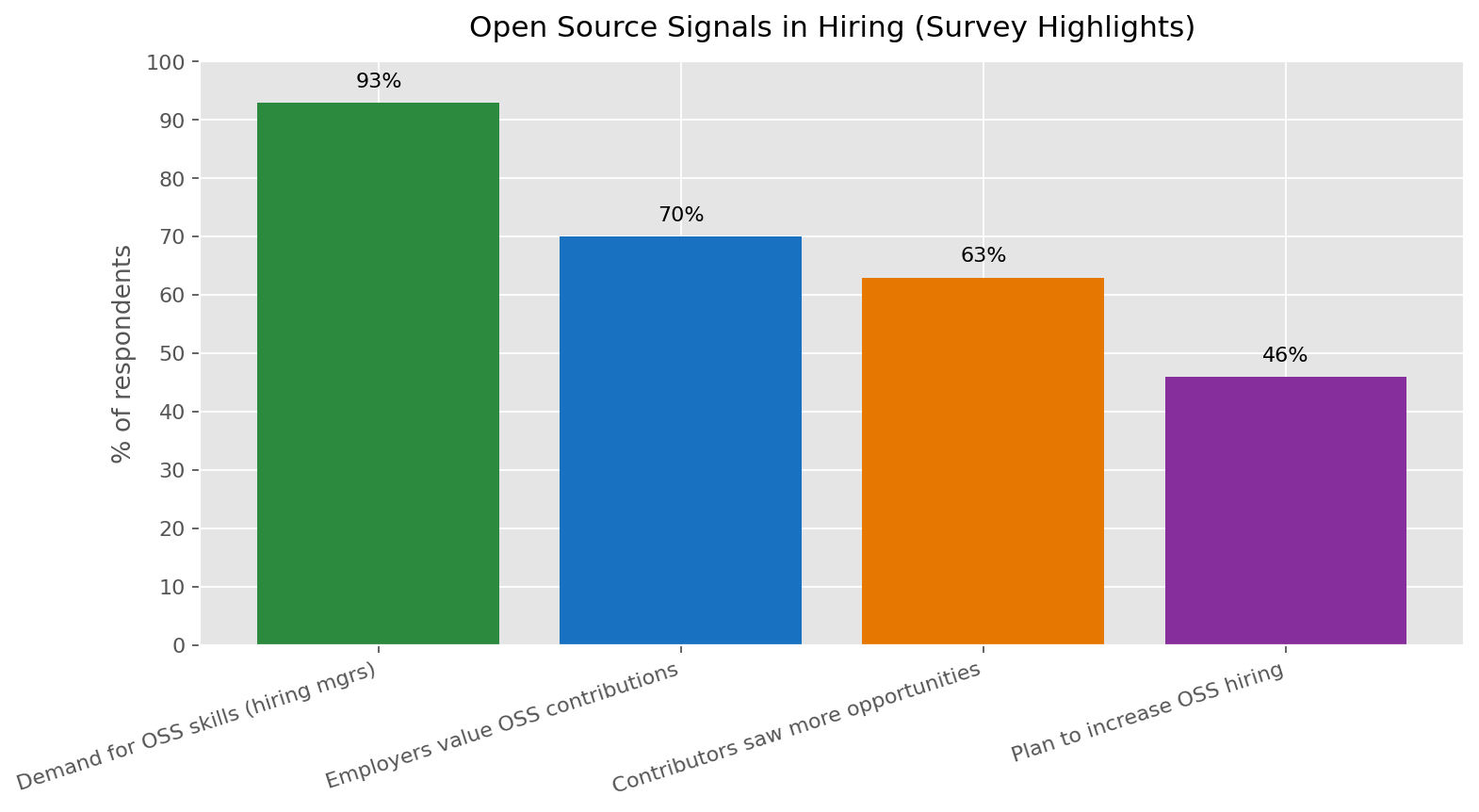
- Stand-out applications – Links to merged PRs trump generic bullet points.
- Bypass take-homes – Relevant, involved PRs can replace paid challenges.
- Conversation fuel – You discuss actual outages and design debates.
- Inbound offers – Core contributors are often recruited directly.
4-Phase Contribution Path
| Phase | Goal | Key Steps | Success Indicators |
|---|---|---|---|
| Observe | Learn norms | Read docs, build local, lurk chat | Code compiles; shortlist issues |
| Break the ice | Land a micro-win | Claim a doc typo or test fix | First PR merged |
| Consistency | Earn trust | Fix bigger bugs, review small PRs | Maintainers recognise your handle |
| Ownership | Lead | Propose features, guide newcomers | Invited to triage/maintain |
One-Week Kick-Off Plan
- Star a project you rely on, enable notifications.
- Build it locally; note one pain point.
- Ship a “good first issue” fix.
- Improve any doc that confused you.
- Watch a PR review and leave one thoughtful comment.
Bottom Line
Open-source is not extracurricular—it is the fast lane to mastery, visibility, and opportunity. Contribute where you have actual usage, be relentlessly useful, and your public work will do the talking.
Was this playbook useful? Drop feedback below or chat with us on Telegram.